
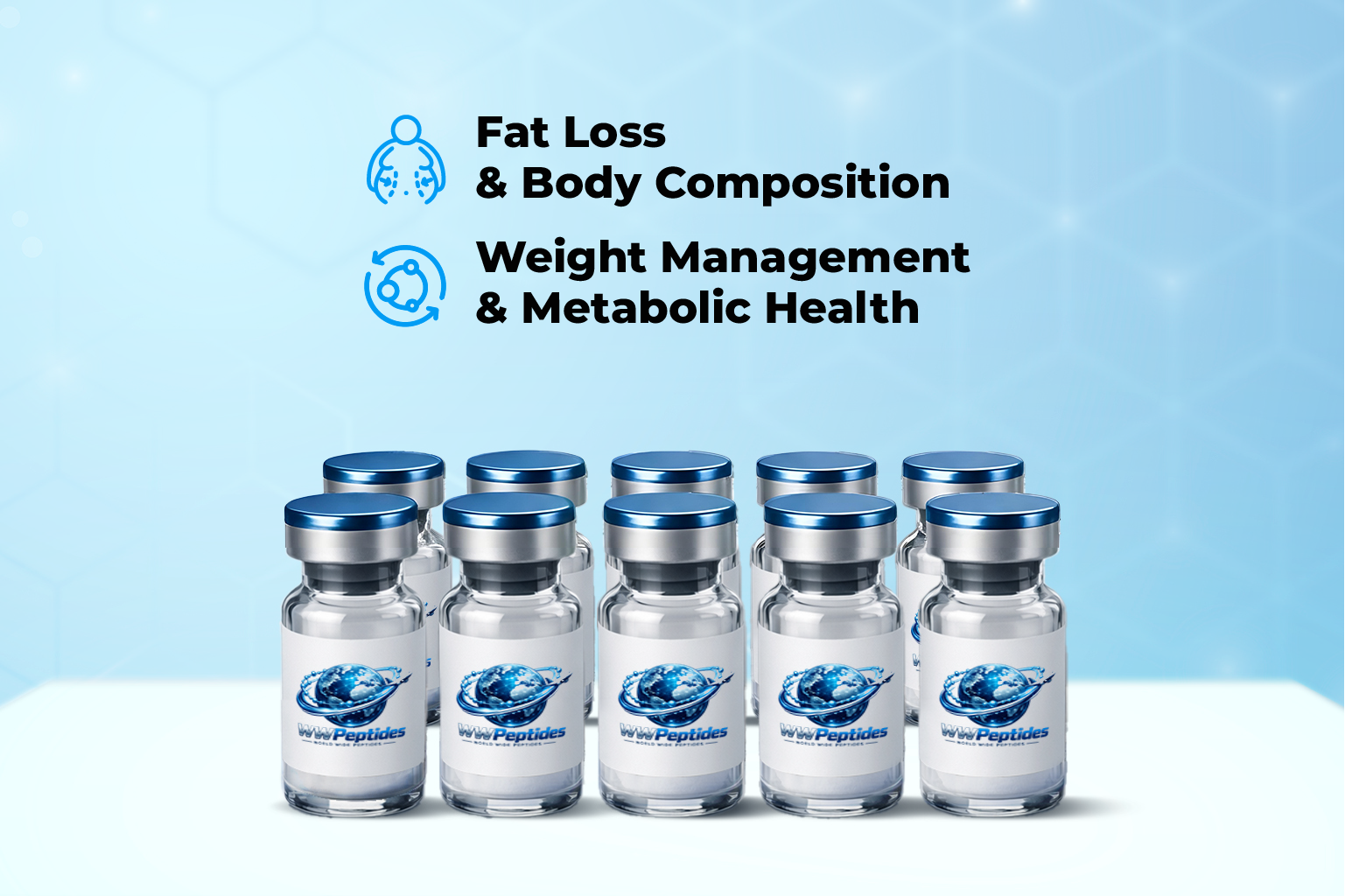
Cagrilintid
Preisspanne: 590,00 $ bis 975,00 $
-
Liefergarantie Kostenloser Nachversand, falls die Lieferung nicht ankommt
-
Reinheit ≥ 99 % Direkt vom Hersteller
-
Unabhängige Echtheitszertifikate COAs für dieses Produkt anzeigen →
-
Garantie auf Gutschriften Senden Sie uns ein beliebiges COA-Ergebnis und erhalten Sie eine Gutschrift
Mengenrabatte
Preis pro Packung (10 Ampullen). Der Rabatt gilt nur für dieses Präparat – keine Kombination mit anderen Produkten.
| Anzahl | Preis | Ersparnisse |
|---|---|---|
| 1 Packung | $590 | - |
| 2 Packungen | $502 | 15 % Rabatt |
| 3 Packungen | $426 | 28 % Rabatt |
| 5 Packungen | $384 | 35 % Rabatt |
| 10 Packungen | $345 | 42 % Rabatt |
| 25 Packungen | $311 | 47 % Rabatt |
| Anzahl | Preis | Ersparnisse |
|---|---|---|
| 1 Packung | $975 | - |
| 2 Packungen | $829 | 15 % Rabatt |
| 3 Packungen | $704 | 28 % Rabatt |
| 5 Packungen | $634 | 35 % Rabatt |
| 10 Packungen | $571 | 41 % Rabatt |
| 25 Packungen | $514 | 47 % Rabatt |
Cagrilintide — Long-Acting Amylin Analog Research Peptide
Cagrilintide is a synthetic long-acting analog of amylin, a hormone co-released with insulin from pancreatic beta cells after a meal. It was developed by Novo Nordisk (the company behind Ozempic and Wegovy) and is most often studied alongside semaglutide in the investigational combination known as CagriSema. Amylin sits on a different signaling pathway than GLP-1, which is why researchers pair the two: combined, they address hunger and satiety through non-overlapping mechanisms. Cagrilintide on its own is the single-peptide research tool for characterizing amylin-receptor effects.
Why Amylin Matters
GLP-1 peptides (semaglutide, tirzepatide) act through the incretin system – they amplify insulin release and slow gastric emptying in response to glucose. Amylin is a parallel hormone that acts on different receptors in the brainstem and hypothalamus to regulate meal size, food reward, and satiety. Native human amylin is fast-degrading and tends to aggregate, so researchers use cagrilintide (a stabilized analog with a fatty-acid side chain similar to semaglutide’s) as the research tool.
| Site of action | Was es im Klartext bedeutet |
|---|---|
| Amylin receptors (brainstem) | Regulates meal-size and satiety signals that are distinct from GLP-1 |
| Stomach | Slows gastric emptying |
| Pancreas | Suppresses post-meal glucagon |
Cagrilintide vs Semaglutide vs CagriSema
These three show up together in most cagrilintide research, so the distinction matters.
| Verbundstoff | Mechanism class | Frequency |
|---|---|---|
| Cagrilintid | Amylin analog (single mechanism) | Once weekly |
| Semaglutid | GLP-1 agonist (single mechanism) | Once weekly |
| CagriSema | Amylin + GLP-1 paired | Once weekly, co-formulated |
Cagrilintide and semaglutide act on non-overlapping pathways, which is the mechanistic basis for pairing them. CagriSema (Cagrilintide / Semaglutide) is the co-formulated research blend, also available from WWP.
Forschungsanwendungen
Cagrilintide is used in studies examining:
- Amylin-receptor signaling in isolation from GLP-1 effects
- Body-composition changes under sustained amylin agonism
- Meal-size and satiety modeling
- Gastric-emptying dynamics separate from incretin effects
- Combination study designs with GLP-1 peptides (CagriSema framework)
- Dose-response curves across the published 0.16-4.5mg range
Technische Daten
| Format | Gefriergetrocknetes Pulver |
| Reinheit | ≥99% |
| Aliasnamen | NN9838, AM833, long-acting amylin analog |
| Verfügbare Größen | 5 mg · 10 mg |
| Lagerung | 2–8 °C ungeöffnet; mindestens 12 Monate haltbar |
| Verwendung | Nur für Forschungszwecke – nicht zur Anwendung am Menschen |
Rekonstitution
Cagrilintide arrives as a freeze-dried powder and is reconstituted with bacteriostatic water:
Gesamtmenge in mg im Fläschchen ÷ hinzugefügte Wassermenge in ml = mg pro ml
Beispiel: Eine 5-mg-Ampulle + 2 ml bakteriostatisches Wasser = 2,5 mg pro ml. Eine 10-mg-Ampulle + 2 ml = 5 mg pro ml.
Nach der Zubereitung bei 2–8 °C lagern und innerhalb von 28–30 Tagen verbrauchen.
Anmerkungen zum Protokoll
The following values are reference points extracted from published cagrilintide clinical studies – not instructions. Published Phase 1 and Phase 2 trials report stepwise dose escalation over several weeks.
- Starting doses reported in the literature: 0.16-0.3mg per administration
- Escalation pattern observed: Weekly or bi-weekly steps through 0.6mg → 1.2mg → 2.4mg → 4.5mg
- Administration frequency in published trials: Once weekly
- Study durations reported: 20-26 weeks in published Phase 2 trials
Common Questions About Cagrilintide Research
Is cagrilintide better than semaglutide?
They are not direct substitutes – they act on different receptor systems. Semaglutide is a GLP-1 agonist; cagrilintide is an amylin analog. Researchers don’t replace one with the other; they pair them (see CagriSema). In monotherapy trials, semaglutide has produced larger body-composition endpoints than cagrilintide alone.
What is the difference between cagrilintide and tirzepatide?
Cagrilintide targets the amylin receptor system; tirzepatide targets GLP-1 and GIP. They are studied in different research contexts. A cross-mechanism combination (cagrilintide + tirzepatide) has been examined in research literature and is the subject of ongoing Novo Nordisk and Eli Lilly work.
What does cagrilintide do in metabolic studies?
It activates amylin receptors in the brainstem and hypothalamus, reducing meal size and delaying gastric emptying. Most commonly tracked endpoints are ad-libitum caloric intake, body composition, and glycemic markers.
Is cagrilintide FDA approved?
No. Cagrilintide is still in Phase 3 clinical trials, most visibly as the CagriSema combination. It is not approved by the FDA for any use. Every vial WWP ships is labeled and sold strictly for laboratory and research use only.
How is cagrilintide stored?
Ungeöffnete Fläschchen werden bei 2–8 °C gelagert und sind mindestens 12 Monate haltbar. Nach der Rekonstitution mit bakteriostatischem Wasser wird die Lösung bei 2–8 °C aufbewahrt und innerhalb von 28–30 Tagen verbraucht.
Reinheitsgarantie
Jede Charge weist eine Reinheit von ≥99 % auf. Senden Sie uns ein Analysezertifikat einer unabhängigen Prüfstelle, und wir stellen Ihnen unabhängig vom Ergebnis eine Gutschrift aus.
-
CJC-1295 ohne DAC
Preisspanne: 200,00 $ bis 340,00 $ Optionen auswählen Dieses Produkt ist in verschiedenen Ausführungen erhältlich. Die Optionen können auf der Produktseite ausgewählt werden. -
5-Amino-1MQ
$210.00 Optionen auswählen Dieses Produkt ist in verschiedenen Ausführungen erhältlich. Die Optionen können auf der Produktseite ausgewählt werden. -
GHRP-6
Preisspanne: 150,00 $ bis 230,00 $ Optionen auswählen Dieses Produkt ist in verschiedenen Ausführungen erhältlich. Die Optionen können auf der Produktseite ausgewählt werden. -
MOTS-c
Preisspanne: 250,00 $ bis 800,00 $ Optionen auswählen Dieses Produkt ist in verschiedenen Ausführungen erhältlich. Die Optionen können auf der Produktseite ausgewählt werden.