
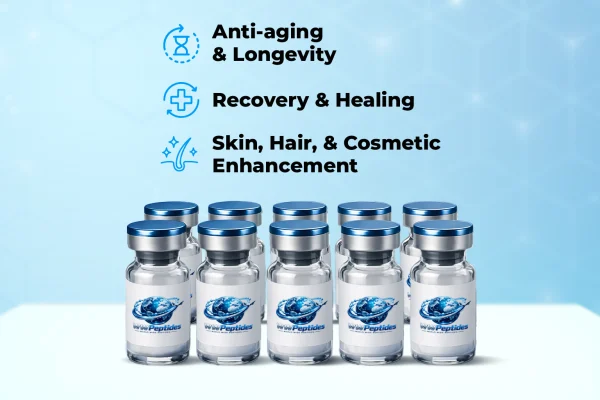
GHK-Cu
Preisspanne: $90.00 bis $151.00
Chargen über Overseas Direct (Direktversand aus Übersee) werden vor dem Versand nicht von Dritten getestet. Unabhängige Tests liegen in der Verantwortung des Kunden. Senden Sie uns ein beliebiges COA und Sie erhalten $300 Shop-Guthaben. Bestellungen aus dem US-Lager: Ein COA ist auf Anfrage erhältlich. Senden Sie uns ein beliebiges unabhängiges COA und Sie erhalten $300 Shop-Guthaben.
-
Liefergarantie Kostenloser Neuversand, falls die Sendung nicht ankommt. Ausgenommen sind Kanada, Brasilien und Singapur.
-
≥99% Reinheitsspezifikation Herstellerspezifikation - unabhängig überprüfbar
-
Unabhängige COAs COAs für dieses Produkt ansehen →
-
Shop-Guthaben-Garantie Senden Sie ein beliebiges COA-Ergebnis und erhalten Sie Shop-Guthaben
GHK-Cu - Kupfer-Tripeptid (Gly-His-Lys-Cu), Forschungssubstanz
GHK-Cu ist die kupfergebundene Form des Tripeptids Gly-His-Lys, das 1973 von Loren Pickart erstmals aus menschlichem Plasmaalbumin isoliert wurde. Die freie GHK-Sequenz bindet zweiwertiges Kupfer (Cu²⁺) mit hoher Affinität, und der daraus entstehende GHK-Cu-Komplex ist das, was in der veröffentlichten Literatur zu Hautreparatur, Haarfollikeln und Angiogenese auftaucht. Es ist die Referenzsubstanz in der Kategorie „Kupferpeptide“ und steht im Mittelpunkt der meisten fertigen Kosmetikseren, die Kupferpeptide auf dem Etikett angeben - die Forschungsachse von GHK-Cu sind Gewebeumbau, Wundreparatur und trophische Signalgebung.
Warum die kupfergebundene Form wichtig ist
Freies GHK hat für sich allein eine mäßige biologische Aktivität. Die kupfergebundene Form bestimmt das veröffentlichte Forschungsprofil. Das Cu²⁺-Ion bringt die Imidazol- und Amingruppen des Histidins von GHK in eine Geometrie, die die Kollagensynthese in Fibroblasten aktiviert, Decorin hochreguliert und kupferabhängige antioxidative Enzyme (SOD, Ceruloplasmin) moduliert. Deshalb ist die Forschungsliteratur speziell um GHK-Cu aufgebaut und nicht um GHK allein.
| Signalweg | Was es bewirkt, einfach erklärt |
|---|---|
| Kupferabgabe (Cu²⁺) | Liefert Kupfer in einer chaperon-gebundenen, nicht toxischen Form an das Gewebe |
| Kollagen- / Decorin-Synthese | Hochreguliert - fördert in veröffentlichten Fibroblasten-Studien den Umbau der dermalen Matrix |
| Angiogenese (VEGF-Weg) | Unterstützt die Bildung neuer Kapillaren in Wundheilungsmodellen |
| Haarfollikel-Signalgebung | Vergrößert die Follikelgröße in veröffentlichten Studien an dermalen Papillen von Nagetieren |
| Antioxidative Enzyme (SOD) | Aktiviert über die Zufuhr von Kupfer als Kofaktor |
| Genexpressionsprofil | Moduliert ~4,000 menschliche Gene in Richtung eines „jüngeren“ Expressionsmusters in Pickarts veröffentlichten Arrays |
GHK-Cu-Forschung: topisch vs. Injektion
Für GHK-Cu existieren zwei unterschiedliche Forschungsachsen. Topische Formulierungen (Seren, Cremes) sind in der Literatur zur kosmetischen Dermatologie angesiedelt; die Injektionsforschung in der Literatur zu Wundheilung und systemischer Signalgebung. Der Mechanismus ist derselbe; der Verabreichungsweg bestimmt, welche Endpunkte messbar sind.
| Weg | Forschungskontext |
|---|---|
| Topisch | Endpunkte an der Hautoberfläche - Kollagendichte, Remodellierung feiner Linien, Pigmentierungsstudien |
| Subkutane Injektion | Systemische Endpunkte zu Wundreparatur, Haarfollikeln und Angiogenese in Nagetiermodellen |
Forschungsanwendungen
GHK-Cu wird in Studien eingesetzt, die Folgendes untersuchen:
- Endpunkte der dermalen Kollagen- und Decorin-Synthese
- Wundheilung und Gewebeumbau nach Verletzungen
- Vergrößerung der Haarfollikel und Signalgebung der dermalen Papille
- Modelle zu Angiogenese und Kapillarbildung
- Aktivität kupferabhängiger antioxidativer Enzyme (SOD)
- Genexpressionsprofile im Vergleich zu Ausgangswerten „gealterten“ Gewebes
Spezifikationen
| Format | Lyophilisiertes Pulver (blaue Färbung durch Kupferkoordination) |
| Reinheit | ≥99% (Herstellerspezifikation) |
| Alternative Bezeichnungen | Kupferpeptid, Gly-His-Lys-Cu, Tripeptid-1-Kupfer, GHK-Kupferkomplex |
| Verfügbare Größen | 50mg · 100mg |
| Lagerung | 2-8°C ungeöffnet; 12+ Monate stabil |
| Verwendung | Nur für Forschungszwecke - nicht zur Anwendung am Menschen |
Lagerung & Handhabung
Ungeöffnete Fläschchen werden unter Standard-Kühlkettenbedingungen bei 2-8°C gelagert und bleiben 12+ Monate stabil. Rekonstitutionsparameter, Lösungsmittelverträglichkeit und Stabilität nach der Rekonstitution für GHK-Cu sind in der veröffentlichten, begutachteten Fachliteratur und in Standardwerken der Peptidchemie dokumentiert.
Referenzliteratur
Veröffentlichte klinische und präklinische Literatur zu GHK-Cu ist über PubMed, Google Scholar und andere Peer-Review-Datenbanken verfügbar. WWP bietet keine Protokollgestaltung, Dosierungshinweise oder Verabreichungsparameter an. Diese Entscheidungen liegen beim Forschenden und einer gegebenenfalls zuständigen Ethikkommission.
Häufige Fragen zur Forschung mit GHK-Cu
Wofür wird GHK-Cu in der Forschung eingesetzt?
Es wird hauptsächlich auf der Achse des Gewebeumbaus untersucht. Veröffentlichte Arbeiten behandeln die dermale Kollagen- und Decorinsynthese, Endpunkte der Wundheilung, die Vergrößerung von Haarfollikeln, Angiogenese und eine umfangreiche Literatur zur Genexpression aus der Gruppe von Pickart, die zeigt, dass GHK-Cu Gewebe in Richtung eines „jüngeren“ Expressionsprofils verschiebt.
Was ist der Unterschied zwischen GHK und GHK-Cu?
GHK ist das freie Tripeptid (Gly-His-Lys). GHK-Cu ist dasselbe Peptid, gebunden an ein zweiwertiges Kupferion. Freies GHK hat für sich allein eine mäßige Aktivität - die kupfergebundene Form bestimmt die veröffentlichte Literatur zu Gewebeumbau und Fibroblasten. Die blaue Farbe von rekonstituiertem GHK-Cu ist das sichtbare Zeichen der Kupferkoordination.
Wird GHK-Cu topisch oder per Injektion verwendet?
Beides. Topische Formulierungen dominieren die Literatur der kosmetischen Dermatologie (Kollagendichte, Umbau feiner Linien). Injektionsforschung dominiert die Literatur zu Wundheilung, Angiogenese und Haarfollikeln. Der Mechanismus ist derselbe; der Verabreichungsweg bestimmt, welche Endpunkte in einem bestimmten Studiendesign messbar sind.
Ist GHK-Cu von der FDA zugelassen?
Nein. GHK-Cu ist nicht als injizierbares Arzneimittel von der FDA zugelassen. Es ist als Inhaltsstoff in kosmetischen Produkten enthalten, die nach kosmetikrechtlichen (nicht arzneimittelrechtlichen) Verfahren reguliert werden. Jedes von WWP versendete Fläschchen ist ausschließlich für die Labor- und Forschungsverwendung gekennzeichnet und wird nur zu diesem Zweck verkauft.
Wie wird GHK-Cu gelagert?
Ungeöffnete Fläschchen werden bei 2-8°C gelagert und bleiben 12+ Monate stabil. Nach der Rekonstitution mit bakteriostatischem Wasser wird die bläulich gefärbte Lösung bei 2-8°C aufbewahrt und innerhalb von 28-30 Tagen verwendet.
Reinheitsgarantie
Jede Charge wird gemäß einer Reinheitsspezifikation von ≥99% geliefert. Senden Sie uns ein COA aus einem beliebigen unabhängigen Test, und wir stellen Ihnen $300 Shop-Guthaben aus, unabhängig davon, was es zeigt.
-
SNAP-8
$112.00 Optionen wählen Dieses Produkt hat mehrere Varianten. Die Optionen können auf der Produktseite gewählt werden -

GLOW (BPC-157 / TB-500 / GHK-Cu)
Preisspanne: $427.00 bis $606.00 Optionen wählen Dieses Produkt hat mehrere Varianten. Die Optionen können auf der Produktseite gewählt werden -
Glutathione
$214.00 Optionen wählen Dieses Produkt hat mehrere Varianten. Die Optionen können auf der Produktseite gewählt werden -
Melanotan 1
$113.00 Optionen wählen Dieses Produkt hat mehrere Varianten. Die Optionen können auf der Produktseite gewählt werden