
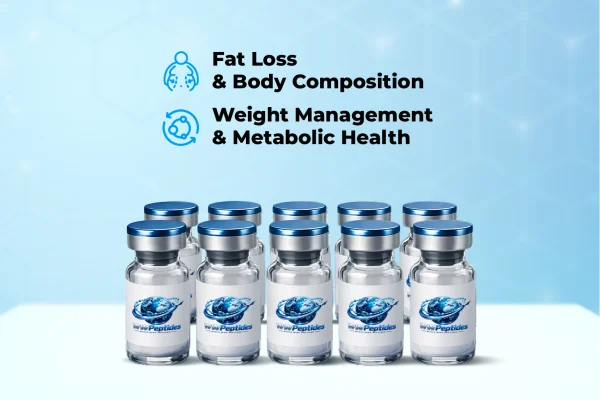
WWP-3X (Reta)
Price range: $231.00 through $1,000.00
Overseas Direct batches are not third-party tested before dispatch. Independent testing is the customer's responsibility. Send us any COA and receive $300 store credit. US warehouse orders: a COA is available on request. Send us any independent COA and receive $300 store credit.
-
Delivery guarantee Reshipped free if it doesn't arrive. Excludes Canada, Brazil, and Singapore.
-
≥99% purity specification Manufacturer spec - independently verifiable
-
Independent COAs View COAs for this product →
-
Store credit guarantee Send any COA result, get store credit
WWP-3X (Reta) - GLP-1 / GIP / Glucagon Triple Agonist
WWP-3X (Reta) is a synthetic research peptide that activates three different metabolic hormone receptors at once: GLP-1 (the same system targeted by semaglutide), GIP (a gut hormone that regulates insulin, also targeted by tirzepatide), and glucagon (the hormone that tells the body to release stored energy). Most compounds in this class hit one or two of these receptors - retatrutide is the first peptide to hit all three in a single molecule, and it is one of the most actively studied compounds in metabolic research.
Why Triple Agonism Matters
GLP-1 and GIP act mostly on the “intake” side of energy-balance signaling - satiety pathways, gastric emptying, and glucose-dependent insulin response. The glucagon receptor adds the “output” side: hepatic energy expenditure and lipid-metabolism signaling. Combining both arms in one molecule lets researchers study intake and expenditure signaling together rather than in isolation.
| Receptor | What it does in plain terms |
|---|---|
| GLP-1 | Satiety signaling, gastric emptying, glucose-dependent insulin response |
| GIP | Insulin-secretion signaling, GLP-1 signal amplification, adipose-tissue signaling |
| Glucagon | Hepatic energy expenditure, lipid-metabolism and hepatic-lipid signaling |
Retatrutide vs Tirzepatide vs Semaglutide
All three peptides come from the same research lineage, but they don’t hit the same receptors. A quick comparison of how they differ at the receptor level:
| Compound | GLP-1 | GIP | Glucagon |
|---|---|---|---|
| Semaglutide | Yes | No | No |
| Tirzepatide | Yes | Yes | No |
| Retatrutide | Yes | Yes | Yes |
The practical research difference: tirzepatide added GIP to what semaglutide already did, and retatrutide added glucagon on top of that.
Research Applications
Retatrutide is used in studies examining:
- Body composition changes under sustained caloric restriction
- How triple-agonist protocols compare to single or dual agonists like semaglutide and tirzepatide
- Blood sugar and insulin response in metabolic models
- Fat accumulation in the liver and its reversal (MASLD / NAFLD research)
- Dose-response curves during gradual dose escalation
- Cardiovascular and metabolic markers under extended exposure
Specifications
| Format | Lyophilized powder |
| Purity | ≥99% (manufacturer specification) |
| Aliases | Reta, LY3437943 |
| Available sizes | 10mg · 20mg · 30mg |
| Storage | 2-8°C unopened; stable 12+ months |
| Use | Research purposes only - not for human use |
Storage & Handling
Unopened vials are kept at 2-8°C under standard cold-chain conditions and remain stable for 12+ months. Solvent compatibility and stability parameters for Retatrutide are documented in the published peer-reviewed literature and standard peptide-chemistry references.
Reference Literature
Published clinical and preclinical Retatrutide literature is available through PubMed, Google Scholar, and other peer-reviewed databases. WWP does not provide protocol design, dosing guidance, or administration parameters. Those decisions rest with the researcher and any applicable institutional review board.
Common Questions About Retatrutide Research
Is retatrutide different from semaglutide?
Semaglutide activates one receptor (GLP-1). Retatrutide activates three receptors (GLP-1, GIP, and glucagon) in a single molecule, which is the structural distinction studied in the metabolic-research literature.
What is the difference between retatrutide and tirzepatide?
Tirzepatide activates GLP-1 and GIP. Retatrutide activates those same two receptors plus glucagon. The added glucagon signaling is the structural difference between the two compounds at the receptor level.
Is retatrutide FDA approved?
No. As of the most recent public data, retatrutide is still in Phase 3 clinical trials. It is not approved by the FDA for any use. Every vial WWP ships is labeled and sold strictly for laboratory and research use only, not for human consumption.
How is retatrutide stored?
Unopened vials are stored at 2-8°C (refrigerator temperature) and stay stable for 12+ months. Once reconstituted with bacteriostatic water, the solution is kept at 2-8°C and used within 28-30 days.
Purity Guarantee
Every batch is supplied to a ≥99% purity specification. Send us a COA from any independent test and we’ll issue $300 store credit regardless of what it shows.
-
WWP-5X (Cagri)
Price range: $207.00 through $323.00 Select options This product has multiple variants. The options may be chosen on the product page -
WWP-1X (Sema)
Price range: $91.00 through $197.00 Select options This product has multiple variants. The options may be chosen on the product page -
WWP-4X (Survo)
$543.00 Select options This product has multiple variants. The options may be chosen on the product page -

5-Amino-1MQ
$87.00 Select options This product has multiple variants. The options may be chosen on the product page